
Ancestry & Origins
The Trump family's American story is a story of two immigrants. One was a teenage barber from a German wine village who went on to run restaurants in Seattle and the Klondike gold fields. The other was the youngest of ten children from a Gaelic-speaking crofting village in the Scottish Hebrides. Neither arrived wealthy, and both came alone. This page tells their stories in detail and footnotes every fact to its source.
1. Kallstadt and the Drumpf question
Kallstadt is a small winemaking village in the Palatinate (Pfalz), the hilly, vine-covered region west of the Rhine. When Friedrich Trump was born there in 1869, the Palatinate belonged to the Kingdom of Bavaria, even though it was separated from the rest of Bavaria by other German states. Today it is part of the state of Rhineland-Palatinate.[1, 2]
How far back the Trumps go in Kallstadt is partly a matter of interpretation. In her family history The Trumps, the biographer Gwenda Blair suggests the family may descend from a Hanns Drumpf, an itinerant lawyer who settled in the village in 1608. The spelling had shifted to "Trump" by the end of the seventeenth century.[3, 4] Blair offers this as a possibility, not a proven line. The earliest ancestor documented in records is a Johannes Trump (1789–1836), who was born in nearby Bobenheim am Berg and married and died in Kallstadt.[5]
The story also runs through another Kallstadt family, the Christs. Friedrich's future wife, Elisabeth Christ, grew up in a house across the street from the Trumps.[6] Reporters who visited in 2016 found villagers more interested in their wine than in their famous connection. The mayor said no obvious traces of the American Trumps remain there.[6]
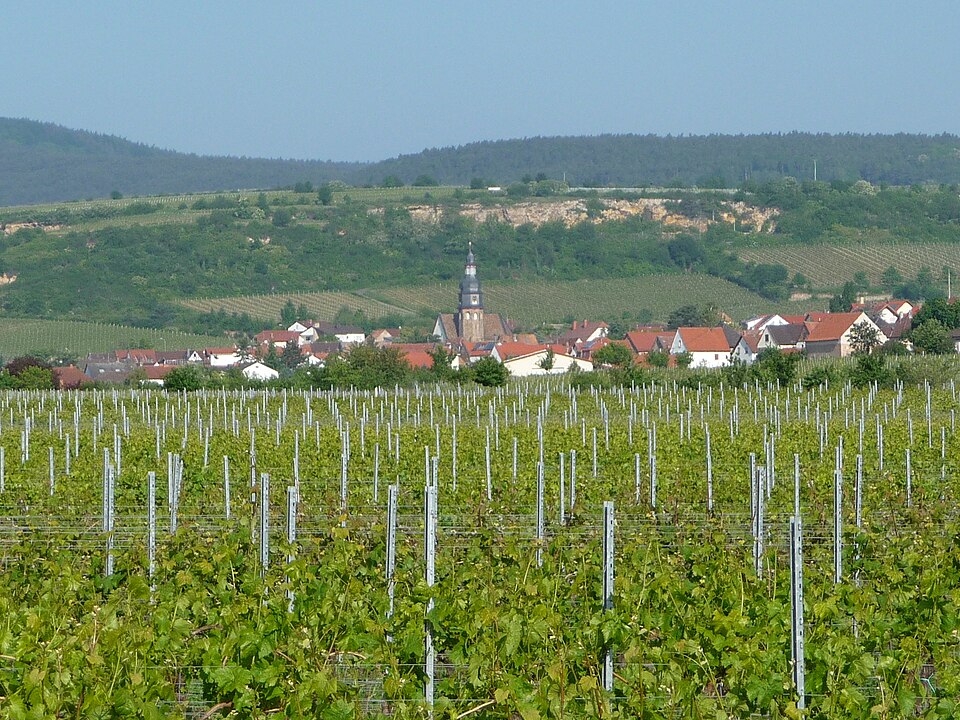
Birthplace of Friedrich Trump (1869) and home village of his wife, Elisabeth Christ.

2. A boyhood in the vineyards
Friedrich was born in 1869 to Christian Johannes Trump (1829–1877) and Katharina Kober (1836–1922), both natives of Kallstadt.[7, 5] Like many villagers, the family worked in the vineyards, and Friedrich was one of several children.[3, 5]
His father was ill for years and died in 1877, when Friedrich was eight. Accounts describe the illness as a long struggle with emphysema.[7, 3] In 1883, at 14, his mother sent him to the nearby town of Frankenthal as an apprentice to a barber. He worked there seven days a week for about two and a half years, learning a trade he could practise anywhere.[5, 3]
By 1885 he was approaching the age at which young men in the German Empire were called up for military service. That timing would matter twenty years later.[8, 9]
3. The crossing, 1885
In October 1885, aged 16, Friedrich left Kallstadt without registering his departure with the authorities. He made his way north to Bremen, nearly 350 miles from home, and bought a steerage ticket to New York.[2, 10]
He landed at Castle Garden, the immigrant processing station at the southern tip of Manhattan that preceded Ellis Island. Published accounts differ on the exact day: some give 17 October and others 19 October.[2, 5] Historians stress how young and unprepared he was. In Blair's words, he "couldn't possibly have known English" and had nothing like a high-school diploma, though he could read and write in German.[2, 3]
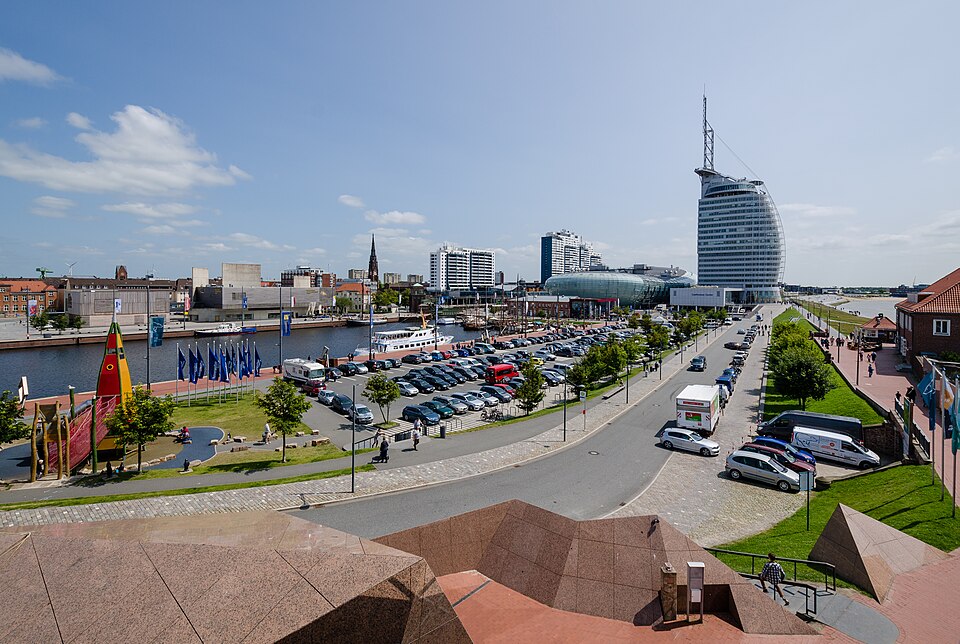
Friedrich left Germany from Bremen in October 1885, aged 16. (Modern view.)

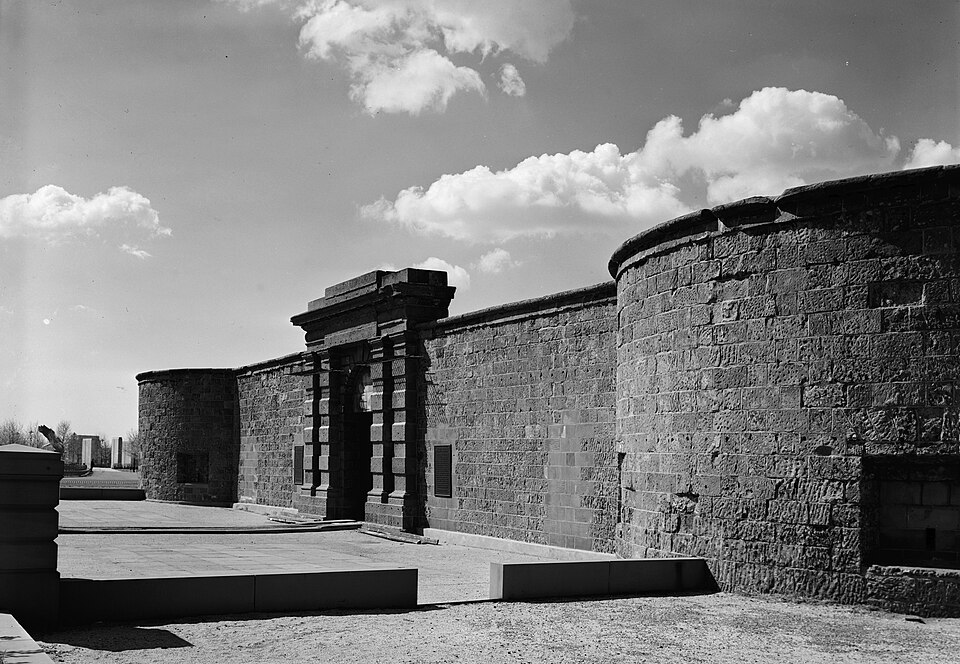
New York's immigrant landing depot at the time; Friedrich arrived here in October 1885.

4. The Lower East Side
Friedrich did not arrive among strangers. His older sister Katharina had emigrated a year or two earlier; sources say 1883 or 1884. She had married Fred Schuster, another Kallstadt emigrant, and the couple lived at 76 Forsyth Street on the Lower East Side, in a neighbourhood crowded with immigrants from the Palatinate. Friedrich moved in with them.[5, 3, 2]
The barber's apprenticeship paid off almost at once. According to family accounts, within hours of arriving he met a German-speaking barber who needed an assistant, and he started work the next day. He cut hair in New York for about six years.[5, 3]
5. Seattle and Monte Cristo
In 1891 Friedrich moved west to Seattle, a fast-growing city still rebuilding after its great fire of 1889. With his savings he bought a restaurant, the Dairy Restaurant, in Pioneer Square, then the heart of the city's red-light district. It advertised "private rooms for ladies," a phrase historians read as a discreet reference to prostitution.[11, 12] In 1892 he became an American citizen in Seattle, and he went on to use the anglicised name Frederick.[2, 1]
He later sold the restaurant and moved to Monte Cristo, a mining boomtown in the Cascade Mountains, where he opened a hotel and a real-estate office. Accounts differ on whether the move came in 1893 or 1894. Monte Cristo's mines quickly disappointed, and by 1896 Trump, like most of the town, had returned to Seattle and opened another restaurant.[12, 11]
6. The Klondike
When news of gold in Canada's Yukon reached Seattle in 1897, tens of thousands of fortune-seekers headed north. Trump joined them, but he followed the strategy that made the gold rush's steadiest fortunes: he went to sell things to the miners rather than dig for gold. He sent associates ahead to stake claims at Hunker Creek in the Klondike, then sold up and travelled north via Skagway, Alaska.[13, 5]
On the way to the gold fields, many stampeders hauled their supplies on foot over the brutally steep Chilkoot or White passes. With a partner, Ernest Levin, Trump opened the Arctic Restaurant and Hotel at Bennett, a tent-and-timber town on Bennett Lake in northern British Columbia, where travellers built boats for the trip downriver to Dawson City.[13, 5] When the White Pass & Yukon Route railway was completed in 1900, the traffic shifted. The partners floated their restaurant's frame downriver to Whitehorse in the Yukon so they could reopen in time for the line's opening.[13, 5]
The Arctic served food and rented rooms. Blair writes that much of its cash flow came from liquor and, she says, from sex work. That characterisation is hers and has been widely repeated; we found no independent confirmation of it.[3, 13] In 1901, as the gold rush waned, Trump sold his share and went home to Germany. He had spent about three years in the north, and he returned a wealthy man by the standards of his village.[13, 5]
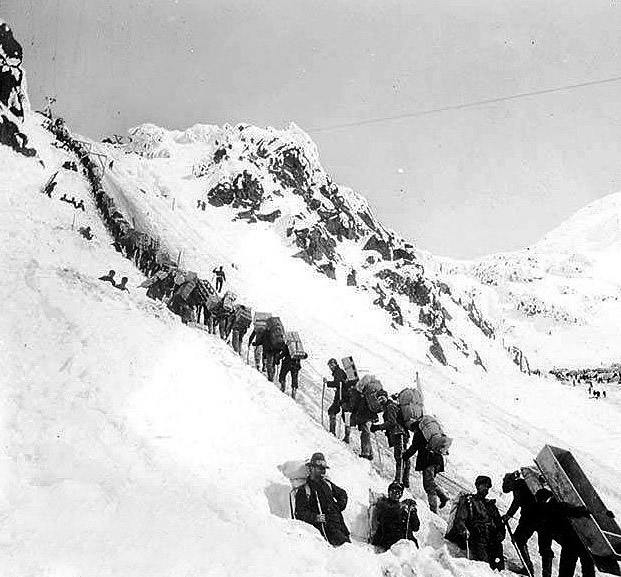
Friedrich ran restaurants and lodging houses for prospectors during the Klondike gold rush. This photo shows the trail they climbed.

7. Marriage, homesickness and exile
Back in Kallstadt, Friedrich married Elisabeth Christ, eleven years his junior and the daughter of the family across the street, in 1902.[1, 6, 3] The couple sailed to New York and settled in the Bronx, where their first child, a daughter named Elizabeth, was born in 1904.[5, 10]
Elisabeth was unhappy in New York and homesick for the Palatinate. In 1904 the family returned to Kallstadt, intending to stay for good.[10, 8] The Bavarian authorities had other ideas. Because Friedrich had emigrated as a teenager without registering and before doing his military service, they treated him as a draft evader. Having become an American citizen, he had also lost his Bavarian citizenship. In February 1905 he was ordered to leave the kingdom or face deportation.[8, 14, 9]
Friedrich wrote a long, deferential appeal to the Prince Regent, Luitpold of Bavaria, calling it his "most subservient request" to be allowed to remain. The letter was rediscovered in a German state archive more than a century later.[9, 8] The appeal was rejected. The historian who found the decree, Roland Paul, has remarked that if Bavaria had let him stay, Donald Trump would not exist.[8, 14] Later in 1905 the family sailed back to New York. Elisabeth was pregnant, and on 11 October 1905 she gave birth in the Bronx to a son, Frederick Christ Trump: Fred, the future builder and father of Donald Trump.[10, 15]
8. Queens, and an early death
The family settled in Woodhaven, Queens. Accounts differ on whether they arrived in 1905 or a few years later. A third child, John George Trump, was born in 1907.[5, 16]
In late May 1918, while walking with his 12-year-old son Fred, Frederick suddenly fell ill. He died on 30 May 1918, aged 49, during the influenza pandemic that killed millions worldwide. His death certificate records pneumonia.[17, 5]
Elisabeth took charge. She went into business with Fred, building and selling houses in Queens, and the firm became known as "E. Trump & Son". Sources disagree on the date of their first house: some say Elisabeth lent Fred $800 in 1923 to build it in Woodhaven, others say 1924.[18, 15, 3] From those beginnings Fred built thousands of homes and apartments across Queens and Brooklyn. Elisabeth lived until 1966.[15, 3]
Fred's younger brother took a very different path. John G. Trump became an electrical engineer and physicist at the Massachusetts Institute of Technology. He was a pioneer of high-voltage X-ray machines for cancer treatment, and in 1943 he examined Nikola Tesla's papers for the U.S. government after the inventor's death.[16, 19]
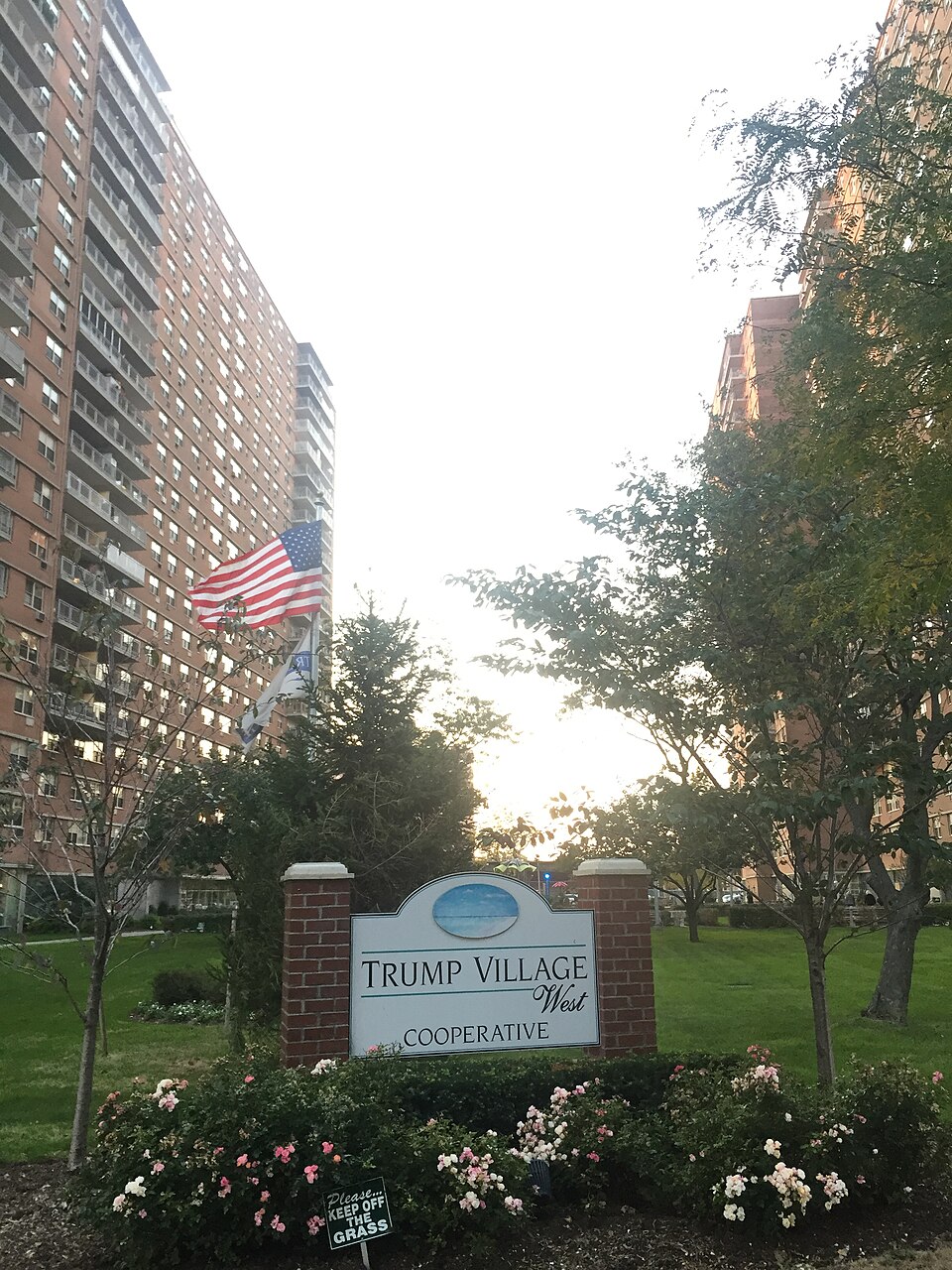
One of Fred Trump's large postwar apartment developments for middle-class New Yorkers.

9. The Isle of Lewis
Donald Trump's mother came from a very different world. The Isle of Lewis is the northern part of the largest island in the Outer Hebrides, off Scotland's north-west coast: windswept, largely treeless, and in the early twentieth century still largely Gaelic-speaking. Mary Anne MacLeod was born on 10 May 1912 in Tong, a crofting village a few miles north of Stornoway, the island's main town.[20, 21, 22]
She was the youngest of ten children of Malcolm MacLeod and Mary Smith MacLeod (1867–1963). The family lived in a pebbledashed croft house that her father had owned since 1895. Malcolm was a fisherman and crofter, and he also served as the local compulsory officer, the official responsible for school attendance. Gaelic was the language of the home.[22, 20, 23]
Life on Lewis in the 1910s and 1920s was hard. The island lost many of its young men in the years around the First World War, and emigration to North America drew away many more, often following relatives who had gone before.[23, 21] Mary Anne had such a relative: her older sister Catherine was already living in New York.[20, 22]
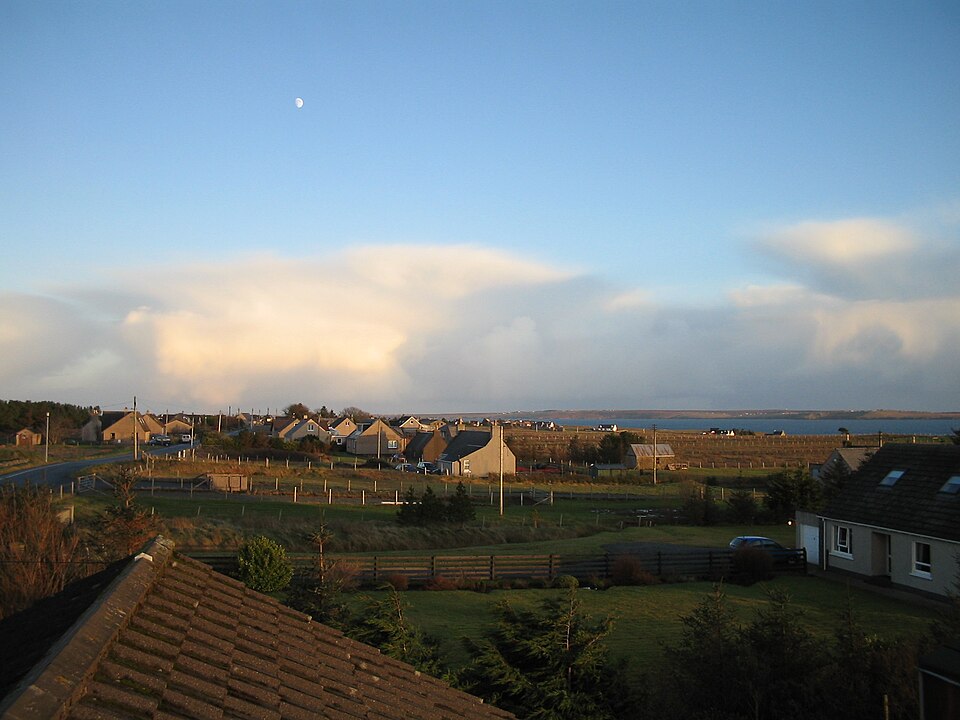
The crofting village where Mary Anne MacLeod, mother of Donald Trump, was born in 1912.

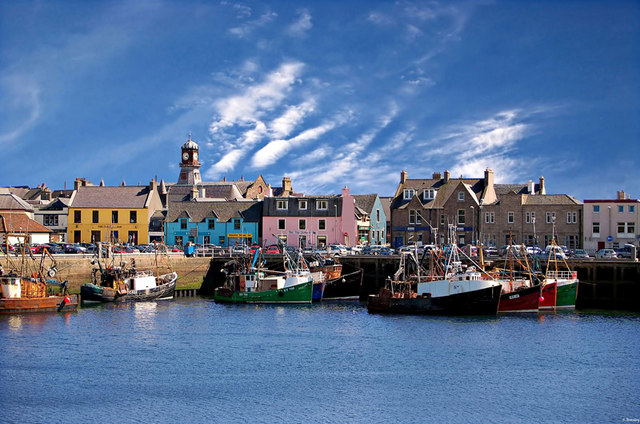
The island's main town, near Tong. Mary Anne left Lewis for New York in 1930.

10. Mary Anne's crossing, 1930
Mary Anne received an immigration visa in Glasgow on 17 February 1930. Records suggest she may have made a short visit to the United States late in 1929.[22, 21] She sailed on the RMS Transylvania and reached New York on 11 May 1930, one day after her eighteenth birthday. The passenger record names her sister Catherine as her contact in America.[22, 20] Some accounts say she left from Stornoway; others say Glasgow.[21, 22]
She settled with Catherine in the Astoria area of Queens. She arrived as the Great Depression was deepening.[20, 21]
11. Two lines meet
By the mid-1930s Fred Trump was a young builder in Queens. Mary Anne, still living with her sister, met him at a party.[22, 3] They married in 1936, and Mary Anne became a naturalised American citizen on 10 March 1942.[22, 21]
The couple raised five children in Queens: Maryanne, Fred Jr., Elizabeth, Donald and Robert. By 1946 Fred had built a family home in Jamaica Estates, and in the early 1950s he built a larger house there.[18] Mary Anne died in 2000, a year after Fred.[21, 15]
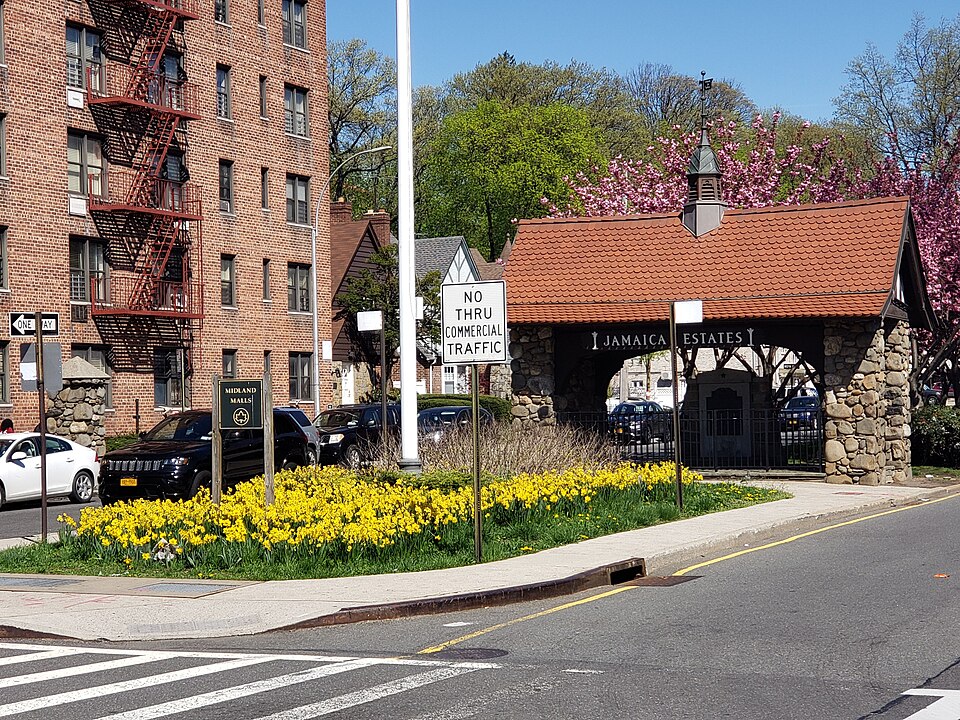
Fred and Mary Trump built their family home in this Queens neighbourhood.

12. What remains uncertain
Family histories accumulate legend, and this one is no exception. Where sources disagree, we say so above rather than pick a version. The main open points:
- The 1608 ancestor. The descent from Hanns Drumpf is a suggestion by Gwenda Blair, not a documented line. The earliest proven ancestor is Johannes Trump (1789–1836).
- Friedrich's arrival date. Given as 17 or 19 October 1885, depending on the source.
- When Katharina emigrated. 1883 or 1884.
- The Klondike businesses. The claim that the Arctic profited from prostitution comes from Blair's account and has not been independently confirmed.
- Friedrich's cause of death. His death certificate says pneumonia. Biographers place it in the 1918 influenza pandemic.
- Mary Anne's departure port. Glasgow or Stornoway, depending on the account.
If you have records that settle any of these, please send a correction.
References
- Friedrich Trump Establishes a Dynasty. Gotham Center for New York City History. Accessed 2026-11-25.
- The story of Donald Trump's grandfather, who came to America as an unaccompanied minor. History News Network, 2018. Accessed 2026-11-25.
- The Trumps: Three Generations That Built an Empire (Gwenda Blair). Simon & Schuster, 2000. Accessed 2026-11-25.
- Drumpf (surname history, citing Gwenda Blair). Wikipedia. Accessed 2026-11-26.
- Frederick Trump. Wikipedia. Accessed 2026-11-26.
- In Trump's German ancestral village, the locals are not impressed. NPR, 2016-02-13. Accessed 2026-11-26.
- We discovered German and Scottish roots in Donald Trump's family tree. Findmypast. Accessed 2026-11-26.
- Report: Letter reveals Donald Trump's grandfather fought expulsion from Germany. CBS News. Accessed 2026-11-25.
- The Emigrants, by Friedrich Trump (translated 1905 letter to Prince Regent Luitpold). Harper's Magazine, 2017-03. Accessed 2026-11-26.
- How Trump's grandparents became reluctant Americans. History.com. Accessed 2026-11-26.
- That time when Donald Trump's grandfather showed up in Seattle's red-light district. The Stranger, 2016-04-11. Accessed 2026-11-26.
- Western Washington was home of first Trump hotel. KING 5. Accessed 2026-11-26.
- How the Klondike gold rush gave rise to the Trump empire. The Globe and Mail. Accessed 2026-11-26.
- Trump's grandfather was deported from Bavaria?. Snopes. Accessed 2026-11-26.
- Fred C. Trump, Postwar Master Builder of Housing for Middle Class, Dies at 93. The New York Times, 1999-06-26. Accessed 2026-11-25.
- A profile of John Trump, Donald's accomplished scientist uncle. Physics Today (American Institute of Physics). Accessed 2026-11-26.
- Trump's grandfather died in the 1918 flu pandemic, according to a Trump biographer. CNN, 2020-03-09. Accessed 2026-11-26.
- Fred Trump made his business huge in Jamaica. Queens Chronicle. Accessed 2026-11-26.
- Nikola Tesla files declassified by FBI. History.com. Accessed 2026-11-26.
- Mary Anne Macleod. Hebridean Connections. Accessed 2026-11-25.
- Mary Trump: Lucky Lass from Stornoway. American Heritage. Accessed 2026-11-25.
- Mary Anne MacLeod Trump. Wikipedia. Accessed 2026-11-26.
- Trump is making a state visit to the U.K., the homeland of his immigrant mother. OPB / NPR, 2025-09-14. Accessed 2026-11-26.